
Your cart is currently empty!
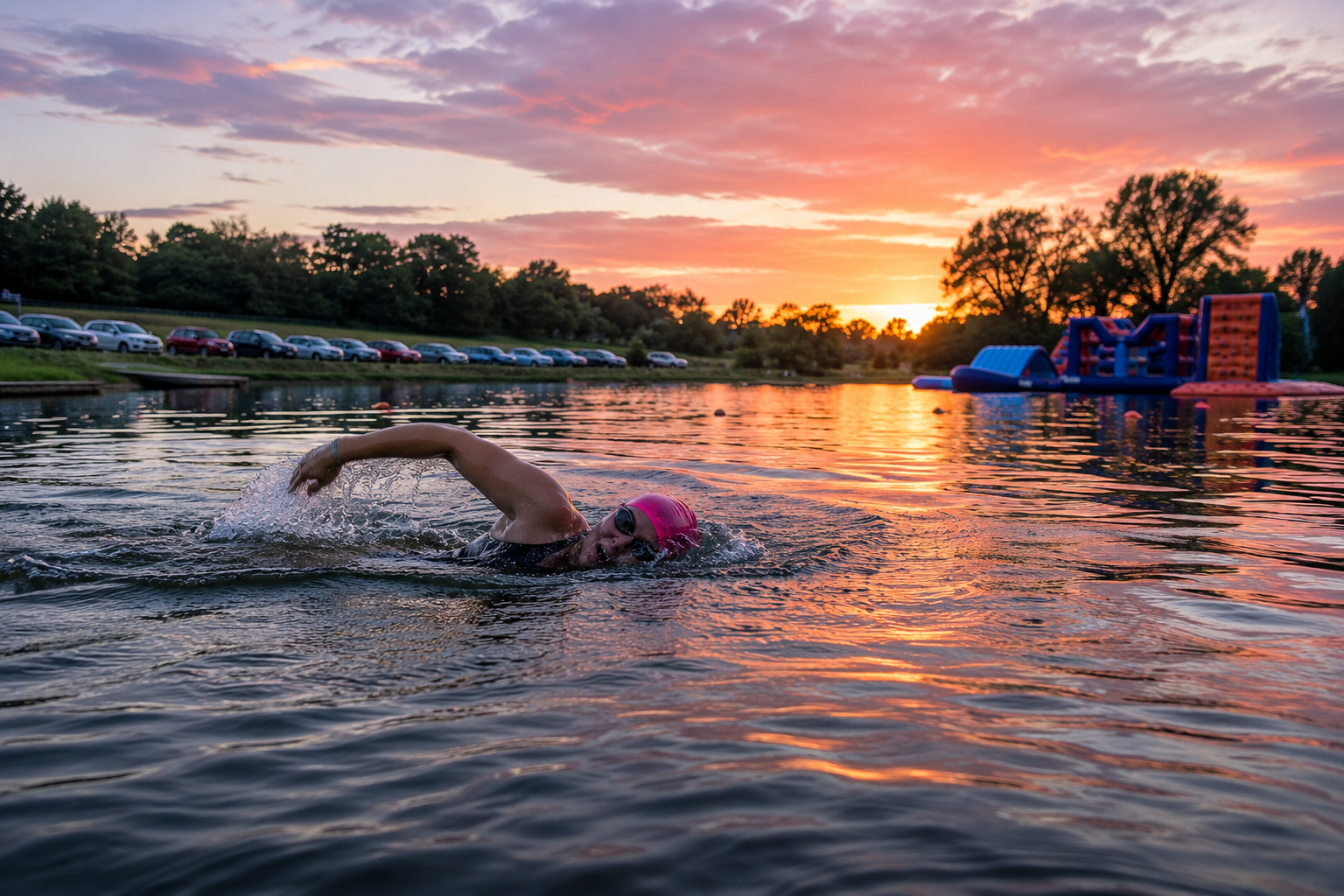
Open Water Courses & Swim Clinics
🏊 Build confidence, skills and safety in open water
From becoming an Open Water Lifeguard to learning front crawl or sharpening your open-water technique, our lake-based courses are here to help you feel more confident, capable and ready for the water.
Before you book (the quick answers)
Open Water Lifeguard Course
Next running 8 / 9 / 10 July.
8 places max.
£250pp.
Next running 8 / 9 / 10 July.
8 places max.
£250pp.
Breaststroke to Front Crawl
For water-confident breaststroke swimmers ready to start their front crawl journey.
For water-confident breaststroke swimmers ready to start their front crawl journey.
Open-Water Skills Clinic
For confident front crawl swimmers, triathletes, event swimmers and open-water challenges.
For confident front crawl swimmers, triathletes, event swimmers and open-water challenges.
Small groups
Numbers are limited so you have time to ask questions and build confidence.
Numbers are limited so you have time to ask questions and build confidence.
What to bring
Swimwear, goggles, swim cap, towel/dry robe and warm layers are a good starting point.
Swimwear, goggles, swim cap, towel/dry robe and warm layers are a good starting point.
Facilities
Changing areas and on-site café available for warming up afterwards.
Changing areas and on-site café available for warming up afterwards.
Choose the right course for your next step
Whether you’re training for a qualification, starting your front crawl journey, or preparing for triathlons, events and open-water challenges, these sessions are designed to help you progress safely and confidently.
SEE COURSE OPTIONS
Courses & Clinics at the Lake
Pick the course that fits where you are now — from lifeguard training to beginner front crawl and more advanced open-water skills.
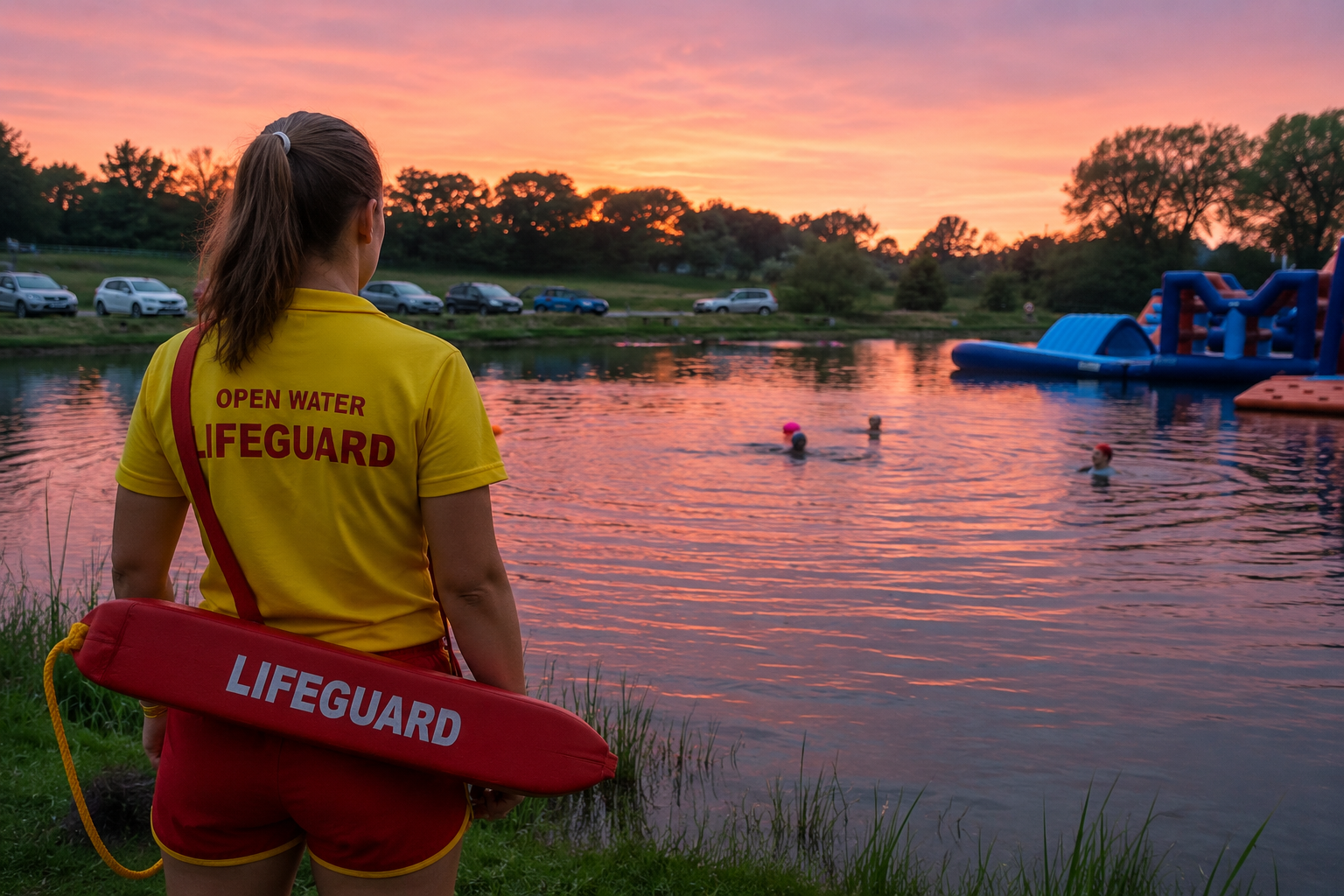
Open Water Lifeguard Course
Best for: confident swimmers ready to train as open-water lifeguards
- Next course: 8 / 9 / 10 July
- Places: 8 people max
- Price: £250
- Age: 16+ at time of assessment
- Requirements: confident in open water, able to submerge, and able to swim 400m continuously with urgency
Email to Enquire
See full course details
Ideal for strong, confident swimmers wanting an open-water safety role.
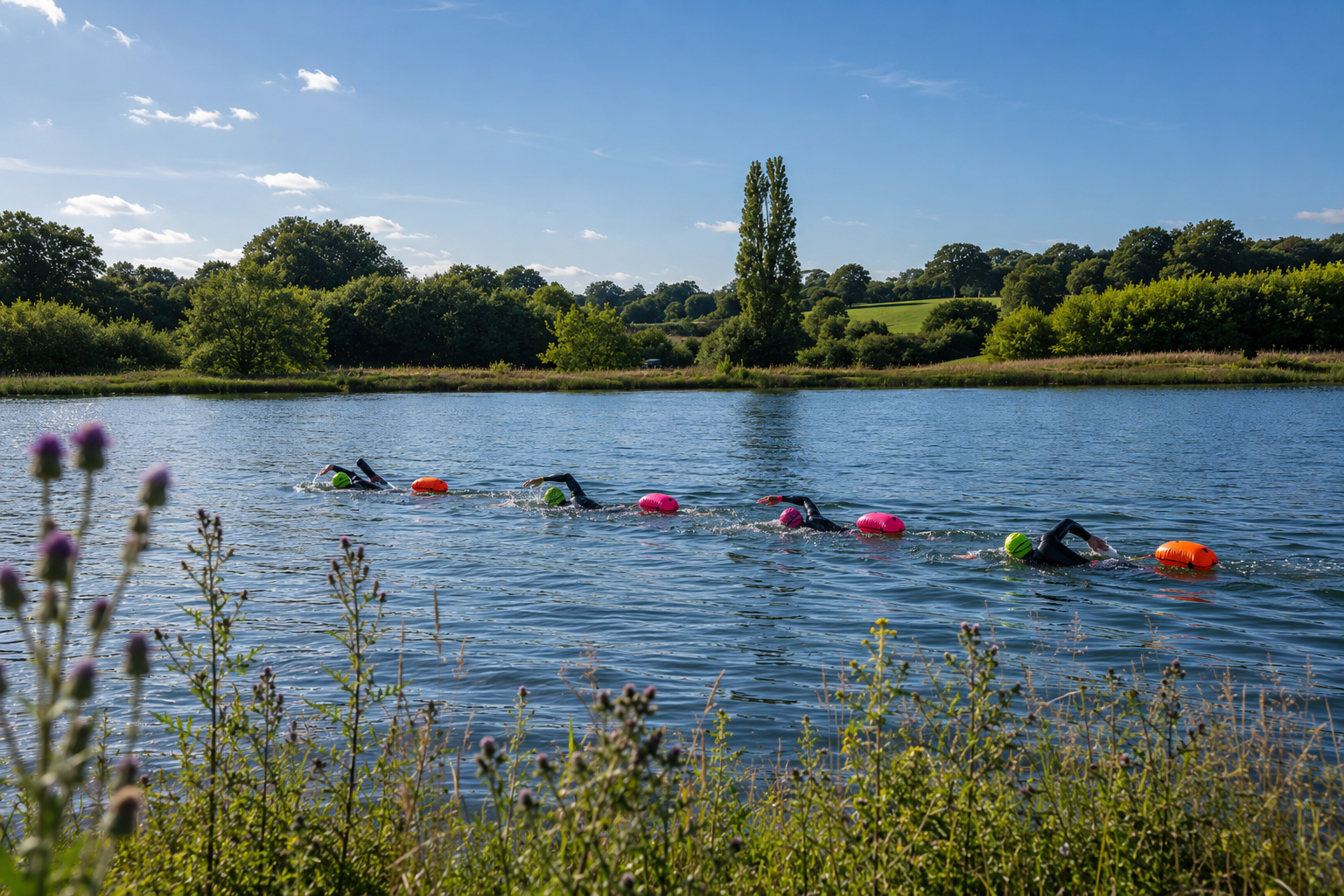
Breaststroke to Front Crawl Clinic
Best for: water-confident breaststroke swimmers starting front crawl
- Max group: 18 people per session
- Cost: £37 + £2 booking fee
- Dates: Sun 14 June, Sat 11 July, Sat 12 September
- Includes: expert coaching from nominated Best Swim Coach of the Year 2025 STA
- Suitable for: regular, water-confident swimmers happy putting their head in the water
Book Clinic
See full course details
A friendly, practical clinic to help you start swimming front crawl in open water.
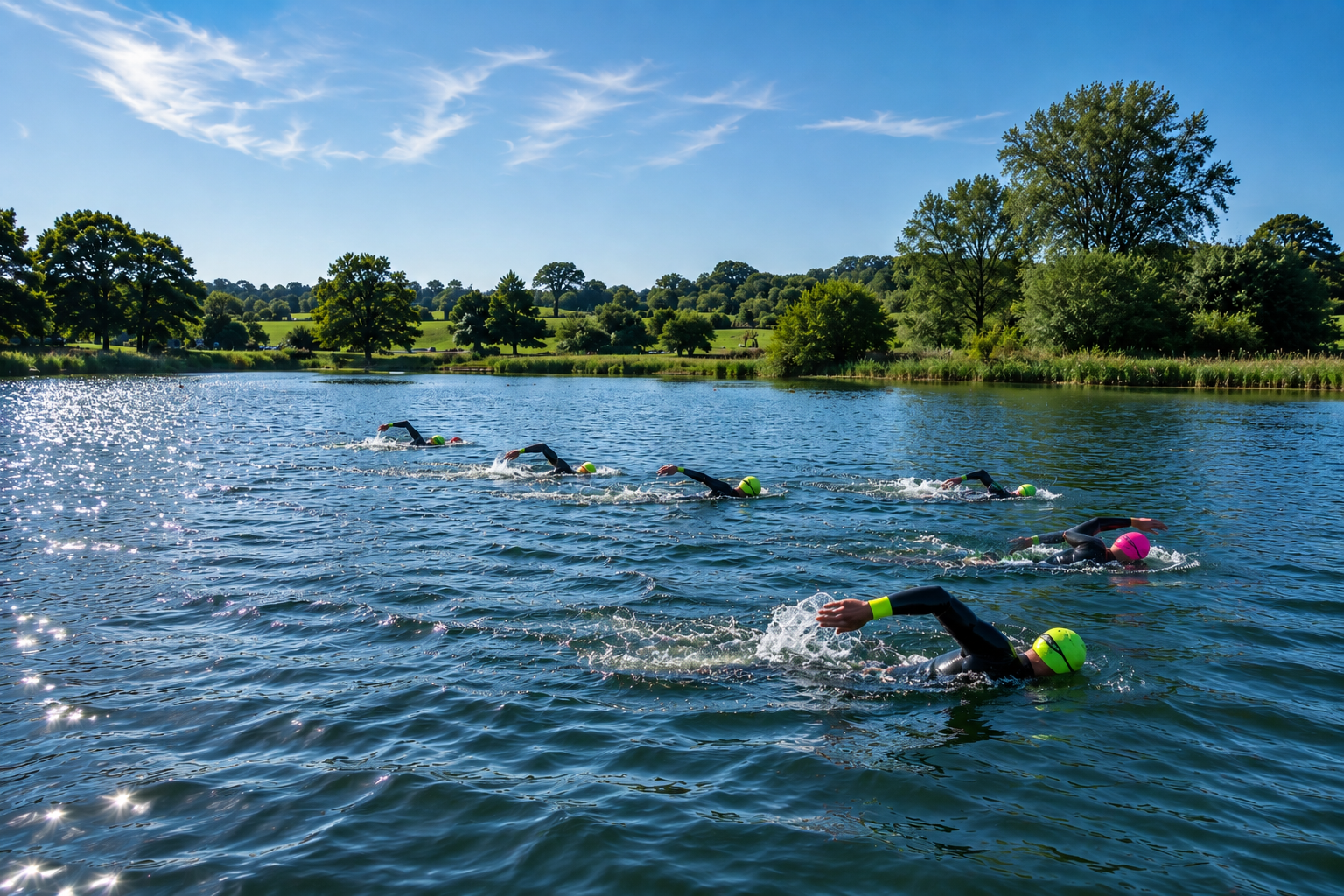
Open-Water Skills Clinic
Best for: front crawl swimmers, triathletes and event training
- For: confident front crawl swimmers, wanting to improve
- Focus: technique, sighting, breathing, rotations and efficiency
- Great for: triathletes, event swimmers and open-water challenges
- Includes: expert coaching from nominated Best Swim Coach of the Year 2025 STA
- Instructor background: represented GBR in Triathlon, Aquabike and Cycling
Email to Enquire
See full course details
For swimmers ready to feel stronger, smarter and more confident in open water.
What to bring
Each course has its own details, but as a general guide:
- Swimwear and comfortable clothing for dry-side activities
- Leak-proof goggles and a silicone swim cap where required
- Towel, dry robe or warm layers for afterwards
- Tow float if you have one — hire may be available where needed
- Any required waivers/forms completed before arrival where applicable
More details
Open Water Lifeguard Course
Next course: 8 / 9 / 10 July.
Places: 8 people max.
Cost: £250.
Requirements:
- 16-years-old or over at the time of assessment.
- Competent and confident in open water.
- Able to submerge under the water confidently.
- Able to swim at least 400 metres in a pool or open water, swimming continuously on their front and showing urgency before attending the course.
To enquire or book, please email us and we’ll come back with the next steps.
Breaststroke to Front Crawl Clinic — Novices
Max group size: 18 people per session.
Cost: £37 + £2 booking fee.
Includes: expert coaching from nominated Best Swim Coach of the Year 2025 STA.
Upcoming dates:
- Sun 14 June | 8.50am–11am
- Sat 11 July | 9.30am–11.30am
- Sat 12 September | 9.00am–11.00am
Who’s this clinic for?
Water-confident breaststroke swimmers who want to learn to convert their breaststroke into starting to swim effortless, heads-down front crawl. You need to be a fairly regular swimmer and have some ability in putting your head in the water.
Essential items to bring:
- Leak-proof goggles
- Silicone swim cap
- Swimwear — come dressed in your swimming kit and tracksuit
- Loose warm clothing for dry-side drills and to wear after your swim
- Towel or dry robe
- Refreshments are available to purchase during and after the clinic
Theory — on land:
The theory behind swimming front crawl, breaking down each part of the stroke and explaining clearly and easily why and how it works. This includes the physics behind the why, discussion, interactive drills on stroke mechanics, environmental factors of swimming outdoors, body biomechanics, safety equipment, how to use your equipment, limiting factors and demonstrations.
In the water:
Become confident getting your head in the water, relaxed breathing, floating, body position guided by your head, what side to breathe on, interactive drills, Coach & Athlete drills, and swimming basic front crawl.
Rewarm & debrief:
Warm up and ask questions.
Safety:
Courses are limited in numbers, ensuring you have time to discuss any questions you have, so you’ll leave with a boost in both your knowledge and practical skills, meaning that you can swim front crawl in open water with greater confidence.
Safety and wellbeing are at the heart of everything. Joining you in the water or on the bank side will be a very experienced and qualified Open Water Lifeguard and cold-water swimmer.
Tow floats: We can loan them for £3 — but bring your own if you have one.
Accessibility: You need to be able to walk down a shallow ramp unaided.
Open-Water Skills Clinic for Front Crawl Swimmers
Designed for already confident front crawl swimmers who want to progress and elevate their technique and swim style in open water.
The sessions reinforce the foundations of the stroke and explain step-by-step how to develop it further, covering fundamentals like how to increase speed and power, sighting, breathing and unit rotations.
This is a great fit for triathletes, event swimmers, open-water challenge swimmers, and anyone wanting to become more confident, powerful, effective and efficient in open water.
Instructor background:
- Represented GBR in three different sports: Triathlon, Aquabike and Cycling.
- Includes expert coaching from nominated Best Swim Coach of the Year 2025 STA.
Who’s this clinic for?
Water-confident and experienced front crawl swimmers who want to improve their knowledge, confidence and comfort swimming front crawl in open water.
Dry-side theory:
Why swimming in open water is so different to the pool, practical tips for swimming wild, event preparation, environmental factors, risk assessing conditions and more.
Water-based practical:
Building confidence with outdoor swim skills including sighting, drafting in a pack, formation swimming, buoy turning and deep-water starts.
Rewarm & social:
Time to warm up, chat through what you’ve learned and ask questions afterwards.


